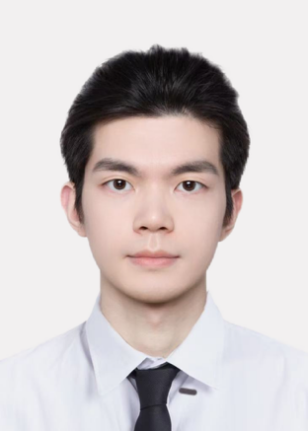
主讲人:梁恩明 研究助理教授
邀请人:苏子诚
时间:2025年12月22日(周一)上午10:00(Beijing Time)
地点:通达馆103会议室
主讲人简介:
Dr. Enming Liang is a Research Assistant Professor at City University of Hong Kong. His research lies at the intersection of machine learning, constrained optimization, and generative models, with application in sustainable energy and transportation systems. He received his Ph.D. from City University of Hong Kong (2024) and B.E. from Sun Yat-sen University (2020). He has published in top-tier venues including JMLR, ICML, ICLR, and AAAI, and has received multiple awards including outstanding paper awards at ICLR workshops and 2nd place in the ACM KDD Cup competition. His work has practical applications spanning power systems, mobility networks, and climate resilience.
主讲内容简介:
Decision-making under constraints is foundational across fields ranging from economics and engineering to machine learning and operations research. At its core, constrained optimization provides a mathematical framework to identify optimal decisions while respecting physical, regulatory, or logical limitations. However, traditional methods often face a critical trade-off: they either maintain feasibility at the cost of computational efficiency or achieve computational speed while sacrificing feasibility guarantees.
This talk presents novel homeomorphism-based approaches that address this fundamental challenge. We introduce two complementary methods that transform complex decision spaces through homeomorphic mappings to simpler domains. First, our Hom-PGD algorithm provides a projection-free method for optimization over general convex sets without requiring expensive oracles, achieving optimal convergence rates while maintaining significantly lower per-iteration complexity than state-of-the-art alternatives. Second, we present Homeomorphic Projection, which guarantees feasibility for neural network solutions to constrained optimization problems through bi-Lipschitz invertible neural networks. Both approaches demonstrate that homeomorphic transformations offer a powerful framework for constrained decision-making, maintaining strict feasibility while reducing computational burden. Our experimental results across various domains, including non-convex power systems optimization, validate the practical benefits of these methods, showing dramatic improvements in solution time while preserving solution quality and constraint satisfaction.
交通学院研究生会
交通学院青年教师沙龙